
In the dynamic landscape of Saudi Arabia’s service industry, time is the most valuable currency a customer possesses. Long, disorganized queues are more than just an inconvenience—they are a direct threat to customer loyalty, staff morale, and your bottom line. Studies consistently show that perceived wait times directly impact customer satisfaction, often more than the actual service duration itself. When customers feel lost in chaotic lines, they leave frustrated, and sometimes, they leave for good.
Across the Kingdom, from bustling bank branches in Riyadh to government service centers in Jeddah and hospitals in Dammam, organizations are waking up to a fundamental truth: managing customer flow is not just about logistics; it is about respect for the customer’s time. This realization has fueled the rapid adoption of technology-driven solutions, positioning the queue management system as an essential tool for any customer-facing business operating under Saudi Vision 2030 .
As businesses in the capital city strive for excellence, the demand for a sophisticated queue management system in Riyadh has grown exponentially. The capital, with its high concentration of financial institutions, government headquarters, and corporate offices, requires solutions that reflect modernity and efficiency. This comprehensive guide explores the transformative power of queue management technology across the Kingdom and why The Nextgen Technologies should be your trusted partner in this journey.
Understanding Queue Management Systems: More Than Just Lines
A modern queue management system is a sophisticated technological ecosystem designed to organize, streamline, and optimize customer flow in service environments. Far removed from the chaotic “stand in line” approach of the past, today’s systems create order, transparency, and efficiency through intelligent digital solutions .
Core Components of a Modern System
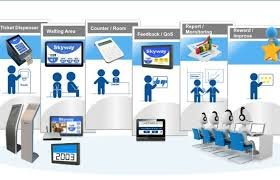
At its heart, a comprehensive queue management solution consists of several integrated components working in harmony:
Ticket Dispensers: Self-service kiosks that allow customers to select their service type and receive a numbered ticket. These touch-screen interfaces guide customers through service options, ensuring they are directed to the correct counter or department from the moment they arrive. Modern systems even offer QR code-based ticketing, eliminating paper waste and enabling contactless check-in .
Digital Signage Displays: Strategically placed screens that display real-time queue status, showing which ticket numbers are currently being served and at which counter. These visual guides eliminate the anxiety of not knowing “when is my turn?” and keep customers informed throughout their wait .
Staff Counter Displays: Small terminals at each service point that show staff which ticket number to call next, with simple controls to serve, recall, or transfer customers as needed.
Central Management Software: The brain of the operation, allowing administrators to configure service types, monitor performance in real-time, generate detailed analytics, and make data-driven decisions about staffing and operations. Real-time dashboards provide supervisors with immediate visibility into queue lengths and wait times across all service points .
Mobile and Remote Functionality: Advanced systems now offer mobile app integration and WhatsApp capabilities that allow customers to join queues remotely, receive notifications when their turn approaches, and even book appointments in advance .
The Psychology of Organized Queuing
The benefits of a queue management system extend beyond mere organization. When customers enter an environment with structured queuing, several psychological factors come into play:
Reduced Anxiety: Digital displays showing estimated wait times and current ticket numbers provide certainty. Customers know their position and can relax, perhaps even step away briefly, rather than hovering anxiously near the counter .
Perceived Fairness: The “first-come, first-served” principle is visibly enforced by the ticket system, eliminating perceptions of favoritism or line-jumping that can create conflict in physical queues.
Improved Staff Morale: Employees freed from the stressful task of managing irate customers or enforcing order can focus entirely on providing quality service, leading to higher job satisfaction and better customer interactions .
Data-Driven Operational Excellence
Perhaps the most valuable aspect of modern queue management systems is the wealth of data they generate. Administrators gain unprecedented visibility into operations through:
Real-Time Dashboards: Live views of queue lengths, wait times, and service durations across all counters, enabling immediate adjustments when bottlenecks form .
Historical Analytics: Long-term data revealing peak hours, average service times by transaction type, and seasonal patterns that inform staffing decisions and capacity planning. With a footfall counter, businesses see exactly how many people enter, when they come, and how long they wait .
Performance Benchmarking: The ability to compare performance across multiple branches or locations, identifying best practices and areas needing improvement .
The Growing Importance of Queue Management System in Saudi Arabia
Saudi Arabia’s service sector is undergoing a profound digital transformation under Vision 2030, and queue management technology sits at the heart of this evolution. Organizations across industries are recognizing that customer experience is the new competitive battleground .
Regulatory Mandates Driving Adoption
The “Digital Government Authority Regulations for Digital Service Delivery, 2023” issued by the Digital Government Authority of Saudi Arabia mandate the implementation of digital queue management systems in public service sectors. These regulations require all government service centers to deploy digital queue solutions that ensure efficient service delivery, minimize wait times, and enhance citizen experience by reducing congestion in public offices .
This regulatory push has accelerated adoption across government entities, from passport offices to civil service centers, ensuring that citizens receive the efficient, organized service they deserve.
Healthcare Sector Transformation
Healthcare facilities across Saudi Arabia are increasingly adopting queue management systems to streamline patient flow and improve care delivery. A compelling example is Ram Clinics, a trusted healthcare brand with 21+ locations across the Kingdom .
Before implementing a queue management solution, Ram Clinics struggled with several challenges:
- Lack of real-time updates left patients guessing about wait times
- No clear directional signage confused patients about where to go
- Poor communication created long lines at service counters
- Staff faced difficulties tracking patient journeys
By implementing digital queue management with self-service kiosks, digital signage screens, and a centralized admin dashboard, Ram Clinics achieved remarkable results:
- Patient wait times dropped by 20 minutes
- Real-time updates reduced reception inquiries
- Directional signage eliminated confusion
- Automated feedback collection enabled continuous improvement
Banking and Financial Services
Banks in Saudi Arabia use queue management systems to control customer flow for different services, including account opening, deposits, and consultations . With customer satisfaction driving brand loyalty in the competitive banking sector, efficient queue management has become a strategic priority.
Retail and Consumer Goods
The retail sector is the largest end-user of queue management systems in the GCC, driven by the need for efficient customer flow management in stores . Shopping malls and retail outlets manage customer entry during peak hours, ensuring pleasant shopping experiences even during busy periods like Ramadan and holiday seasons .
Queue Management System in Riyadh: The Capital’s Digital Transformation
As the political and administrative heart of Saudi Arabia, Riyadh demands solutions that reflect its status as a global capital. The implementation of advanced queue management system in Riyadh installations demonstrates the city’s commitment to modern, efficient service delivery.
Government Leadership
Government offices in Riyadh, including passport and visa centers, employ queue management systems to deal with the large crowds of visitors they serve daily . These systems ensure orderly service delivery and reduce the stress associated with government transactions.
Banking Excellence
Riyadh’s numerous bank branches serve a sophisticated clientele with high expectations. Queue management systems in the capital’s financial institutions ensure that customers receive consistent, transparent service, whether they are conducting routine transactions or complex financial negotiations.
Healthcare Innovation
Hospitals and clinics in Riyadh are leveraging queue management technology to reduce patient waiting times and improve care quality. Departmental queuing for radiology, outpatient services, and laboratories ensures that patients flow smoothly through their healthcare journey .
Corporate Professionalism
Riyadh’s corporate sector, including headquarters of national and multinational companies, relies on queue management to create professional first impressions in reception areas and streamline visitor management processes.
Queue Management System in Saudi Arabia: A Nationwide Transformation
The adoption of queue management system in Saudi Arabia extends far beyond the capital, touching businesses and public institutions across the Kingdom.
National Scale Implementations
The GCC Queue Management System market is valued at USD 65 million, with Saudi Arabia and the UAE dominating due to rapid urbanization, high population density, and significant investments in infrastructure development . Saudi Arabia’s Vision 2030 initiative to diversify the economy further contributes to the demand for queue management solutions across all regions.
Key Players in the Market
The Saudi Arabia queue management system market is driven by companies like QueuePro Arabia, Q-Master Solutions, and LineFlow Middle East . International players including Qmatic AB, Wavetec FZCO, and Skiplino Technologies also maintain strong presence in the Kingdom, contributing to innovation and service delivery .
Local Success Stories
Qwaiton, a cloud-based queue management system founded in 2018, has established offices in Saudi Arabia and serves over 65,000 customers in more than 120 countries . The company’s success demonstrates the growing demand for sophisticated queue management solutions in the Kingdom.
Similarly, Qwaiting has demonstrated remarkable success with implementations like Ram Clinics, proving that local providers understand the unique needs of Saudi businesses and consumers .
Digital Transformation Drivers
Several factors are accelerating queue management adoption across Saudi Arabia:
Vision 2030 Alignment: The national focus on digital transformation encourages organizations across sectors to modernize operations .
Customer Expectations: With 70% of GCC consumers prioritizing quick service, businesses must meet rising expectations or lose customers to competitors .
Operational Efficiency: Queue management systems can reduce wait times by up to 42% through AI and IoT integration, delivering measurable operational improvements .
Post-Pandemic Safety: Contactless queue solutions became essential for maintaining social distancing and ensuring customer safety, and these benefits continue to drive adoption .
Key Features of World-Class Queue Management Solutions
When evaluating queue management options, organizations should look for features that deliver maximum value:
Self-Service Kiosks
Intuitive touch-screen kiosks allow customers to check in independently, selecting their service type and receiving a numbered ticket. This automation reduces front-desk staffing requirements and speeds the arrival process .
Digital Signage Integration
Real-time displays throughout the facility keep customers informed about queue status, current ticket numbers, and estimated wait times. This transparency reduces anxiety and eliminates the need for customers to constantly ask “when is my turn?” .
Mobile Notifications
Advanced systems send SMS or app-based alerts when a customer’s turn is approaching, allowing them to wait comfortably rather than hovering near the counter. Some systems even allow remote ticket acquisition via WhatsApp before the customer arrives .
Multi-Location Management
For organizations with multiple branches, central management capabilities allow administrators to monitor and manage queues across all locations from a single dashboard. This visibility enables consistent service standards and rapid response to emerging issues.
Comprehensive Analytics
Detailed reporting on wait times, service durations, customer volumes, and staff performance provides the insights needed for continuous improvement. Data-driven decisions about staffing, training, and process optimization become possible .
Appointment Integration
The ability to integrate scheduled appointments with walk-in traffic creates a seamless experience for all customers. Those with appointments can receive priority treatment while walk-ins are smoothly incorporated into the flow .
Touchless and Paperless Options
Modern systems offer QR code ticketing and mobile check-in, eliminating paper waste and enabling hygienic, contactless customer experiences .
Benefits Across Industries
Queue management systems deliver value across virtually every customer-facing industry in Saudi Arabia:
Banking and Finance
- Reduced branch congestion during peak hours
- Consistent customer experience across all locations
- Data-driven staffing optimization
- Enhanced professional image
Government and Public Services
- Improved citizen satisfaction with public services
- Transparent, fair service delivery
- Compliance with Digital Government Authority regulations
- Efficient management of high visitor volumes
Healthcare
- Streamlined patient registration and routing
- Reduced waiting times for critical care
- Improved patient experience in stressful situations
- Better staff utilization across departments
Retail
- Enhanced shopping experience during peak seasons
- Organized checkout and customer service areas
- Data insights for staffing optimization
Education
- Departmental queues for different student services
- Pre-booked appointments and mobile tokens
- Queue position reminders for effective student communication
- Peak hour and service pattern reports for staff planning
The Nextgen Technologies: Your Trusted Partner for Queue Management Solutions in Saudi Arabia
When it comes to implementing a world-class queue management system in Saudi Arabia, the technology partner you choose matters as much as the equipment itself. thenextgentechnologies has established itself as a premier provider of integrated technology solutions across the Kingdom, with the expertise and local presence to ensure your queue management transformation succeeds.
Why Choose The Nextgen Technologies?
Deep Regional Expertise: We understand the unique challenges faced by Saudi organizations across banking, government, healthcare, and retail sectors. Our solutions are specifically selected and configured for success in the Kingdom’s operating environment, aligned with Vision 2030 objectives.
End-to-End Solution Integration: A queue management system is more than the sum of its components. We provide comprehensive solutions that integrate ticket dispensers, digital signage, staff terminals, central software, and analytics into a seamless operational ecosystem .
Cutting-Edge Technology Partnerships: We partner with world-leading manufacturers to bring the latest innovations to Saudi Arabia. Our solutions incorporate the same technology trusted by major banks, government institutions, and healthcare providers nationwide.
Local Support and Maintenance: Technology investments require ongoing support to deliver maximum value. Our team provides responsive installation, training, and maintenance services across major Saudi cities, including Riyadh, Jeddah, and Dammam, ensuring minimal downtime and maximum operational efficiency.
Customized Solutions: We recognize that every organization has unique requirements. Whether you need a single-location system for a clinic or an enterprise-wide deployment across dozens of branches, we tailor our solutions to your specific needs.
Our Commitment to Your Success
At The Nextgen Technologies, we don’t just sell equipment—we build partnerships. We invest time in understanding your specific operational challenges, customer demographics, and growth objectives. This consultative approach ensures that every solution we deliver contributes meaningfully to your business success.
The queue management represents one of the most significant opportunities for improving customer satisfaction and operational efficiency in the Saudi market. With the right technology partner, you can transform your service environment from a source of frustration into a competitive advantage.
Visit our website at thenextgentechnologies.com to explore our comprehensive range of queue management solutions and connect with our expert team. Whether you’re opening a new branch in Riyadh, upgrading an existing operation in Jeddah, or expanding across multiple cities, we have the expertise and resources to support your success.
Conclusion: The Future of Queue Management in Saudi Arabia
The transformation of customer service in Saudi Arabia is well underway. As organizations across banking, government, healthcare, and retail embrace digital solutions under Vision 2030, the queue management system has emerged as an essential tool for delivering the experiences that modern customers expect.
The data tells a compelling story: the GCC queue management market is valued at USD 65 million and growing . Government regulations mandate digital queue solutions in public service centers . Healthcare providers like Ram Clinics have reduced wait times by 20 minutes through smart implementation . The foundation for widespread adoption has never been stronger.
Looking ahead, we can expect even more sophisticated capabilities: AI-driven insights that predict customer traffic and optimize queues automatically , deeper integration with mobile apps for remote queuing , and seamless connections with customer relationship management systems. The organizations that embrace these advances today will be the ones leading their industries tomorrow.
For businesses in Riyadh and across Saudi Arabia, the message is clear: investing in queue management technology is investing in customer loyalty, operational efficiency, and long-term competitiveness. The organizations that organize their queues thoughtfully are the ones that customers will choose, again and again.
The time to modernize your customer flow is now. Partner with The Nextgen Technologies and take the first step toward transforming your service environment for the demands of 2026 and beyond.
Frequently Asked Questions (FAQs)
1. What exactly is a queue management system and how does it work?
A queue management system is an integrated technology solution designed to organize customer flow in service environments . It typically includes self-service ticket kiosks where customers select their service type and receive a numbered ticket, digital signage displays showing real-time queue status, staff terminals at service counters, and central management software. Customers wait comfortably until their number is called, and administrators gain valuable data on wait times, service efficiency, and customer volumes .
2. Why are queue management systems becoming essential in Saudi Arabia?
Several factors drive queue management adoption in Saudi Arabia: government regulations mandating digital queue solutions in public service centers , Vision 2030’s emphasis on digital transformation , rising customer expectations with 70% of GCC consumers prioritizing quick service , and post-pandemic demand for contactless experiences . Organizations that fail to implement efficient queue management risk losing customers to competitors who value their time.
3. Are queue management systems available and supported in Riyadh?
Yes, absolutely. Riyadh has emerged as a key location for queue management implementations. Government offices, banks, healthcare facilities, and corporate headquarters across the capital have deployed these systems . Major providers maintain local offices and support teams in Riyadh to ensure responsive service. The Nextgen Technologies provides comprehensive support for queue management systems throughout Riyadh and all major Saudi cities.
4. Can queue management systems integrate with mobile apps and WhatsApp?
Yes, modern queue management systems increasingly offer mobile integration capabilities. Advanced solutions allow customers to obtain queue tickets remotely via mobile apps or WhatsApp before arriving at the facility . Systems can send SMS or app-based notifications when a customer’s turn approaches, enabling them to wait comfortably elsewhere . Some solutions even offer QR code-based ticketing for completely paperless, contactless experiences .
5. How do queue management systems improve staff efficiency and reduce operational costs?
Queue management systems improve efficiency in multiple ways. By automating customer check-in and providing clear guidance, they free staff from manually managing lines . Real-time dashboards allow supervisors to identify bottlenecks immediately and redirect resources where needed most . Historical analytics reveal peak hours and busy days, enabling data-driven staffing decisions that match resources to demand . The result is better customer service with optimized labor costs and reduced waste from inefficient operations—a study shows AI-driven solutions can reduce wait times by up to 52% .